


 English
 Spanish
 French
 German
 Italian
 Chinese (Simplified)
 Japanese
 Korean
 Arabic
 Portuguese

 Send Inquiry
Vaccum Filter Holders
Price 3000 INR/ Piece
MOQ : 10 Pieces
Vaccum Filter Holders Specification
- Shape
- Round Funnel
- Accuracy
- High Filtration Efficiency
- Control Type
- Manual Clamp Operation
- Features
- Reusable, Highly transparent, Resistant to thermal shock, Easy to assemble and clean
- Glass Type
- Borosilicate Glass
- Temperature Resistance
- Up to 200C
- Usage
- Use For Industrial
- Type
- Other
- Dimension (L*W*H)
- Standard Sizes Available
- Product Type
- Holders
- Equipment Type
- Laboratory Vacuum Filtration Device
- Equipment Materials
- Borosilicate Glass, Stainless Steel Clamp, Silicone/Neoprene Stopper
- Power
- Not Required (Manual Operation)
- Material
- Steel
- Application
- Good Working
- Capacity (Ltr)
- 250 ml, 500 ml, 1000 ml
- Use Environment
- Laboratory, Analytical Testing, Environmental Monitoring
- Chemical Resistance
- High (suitable for most acids and solvents)
- Clamp Material
- Stainless Steel or Aluminum
- Connection Type
- Standard Ground Joint, Vacuum Hose Connection
- Autoclavable
- Yes
- Compatible Filters
- Membrane filters, Glass fiber filters
- Filter Support
- Sintered glass disc or stainless steel support
- Funnel Diameter
- 47 mm or 90 mm
- Stopper Size
- Standard adaptable sizes
- Maximum Operating Pressure
- -0.08 MPa (Vacuum)
- Base Type
- Porous Glass Frit/Base
Vaccum Filter Holders Trade Information
- Minimum Order Quantity
- 10 Pieces
- Payment Terms
- Cash in Advance (CID), Cash Advance (CA)
- Supply Ability
- 10 Pieces Per Day
- Delivery Time
- 1 Week
- Main Domestic Market
- All India
About Vaccum Filter Holders
Vaccum Filter Holders
These mechanisms are used in microbiological quality control e.g. of water, soft drinks and other laboratory reagents. Analytical determination e.g. of metal particles in lubricating oil and iron oxides in boiler water. Stainless steel and borosilicate glass frit filter support gives optionally uniform distribution of retained bacteria or particles on the membrane filter surface. It can be flamed to sanitize between samples without membrane.
Stainless steel vaccum filter holder consists of lid with ptfe sealing ring, 250 ml funnel base clamp to connect filter section, detachable 47 mm filter disk, silicon gasket ring with rubber cork to connect with 1000 ml borosilicate filter flask.
Precision Filtration for Critical Laboratory Needs
Our vacuum filter holders are engineered to provide reliable filtration for laboratory, analytical, and environmental applications. Featuring durable borosilicate glass construction, high chemical resistance, and adaptable support systems, these devices excel in accuracy, versatility, and ease of use. Multiple funnel and capacity options allow customizability for sample sizes and experimental requirements, ensuring high confidence in routine and specialized filtration tasks.
Built to Last and Easy to Maintain
Manufactured with high-grade materials such as stainless steel, aluminum, and borosilicate glass, these filter holders offer exceptional durability and chemical resistance. Their reusable nature, thermal shock resistance, and compatibility with autoclaving make them highly cost-effective for laboratories. The transparent glass construction and simple assembly further streamline cleaning, inspection, and maintenance procedures.
FAQ's of Vaccum Filter Holders:
Q: How do I assemble and use the vacuum filter holder for laboratory filtration?
A: To assemble, connect the funnel, support base, and vacuum hose via the standard ground joint and clamp. Place the compatible filter (membrane or glass fiber) on the support, secure with the funnel, and ensure tight seals using the clamp and stopper. Apply vacuum using a manual pump to draw liquid through the filter. The device is easy to disassemble for cleaning afterwards.Q: What types of filters and chemical samples are compatible with this vacuum filter holder?
A: This device accommodates membrane filters and glass fiber filters, making it suitable for a wide range of laboratory and environmental samples. It is highly resistant to acids, solvents, and most chemicals, thanks to its borosilicate glass and stainless steel construction.Q: When should I choose a sintered glass disc versus a stainless steel filter support?
A: Opt for a sintered glass disc for fine particle retention and analytical purity, particularly with aqueous or organic solutions. Stainless steel supports are preferred for robustness, repeated use, and when filtering viscous or particulate-rich samples.Q: Where is this vacuum filter holder best utilized in laboratory environments?
A: These holders are ideal for laboratory filtration tasks in research, environmental monitoring, analytical testing, and industrial quality control, delivering reliable results wherever precise liquid filtration is required.Q: What are the cleaning and sterilization procedures for this filter holder?
A: The components can be easily disassembled and cleaned manually with laboratory detergents. They are autoclavable, allowing for high-temperature sterilization. The borosilicate glass and stainless steel elements provide excellent resistance to thermal shock and wear.Q: How does using this vacuum filter holder benefit laboratory processes?
A: Utilizing this device enhances filtration speed and efficiency, delivers high accuracy, and accommodates a variety of sample sizes. Its robust construction, user-friendly assembly, and reusability reduce maintenance costs and downtime, optimizing workflow in busy laboratory settings.Q: What sizes and capacities are available for this vacuum filter holder?
A: The vacuum filter holders are available with 47 mm and 90 mm funnel diameters and capacities of 250 ml, 500 ml, and 1000 ml, offering flexibility for different filtration volumes and experimental requirements.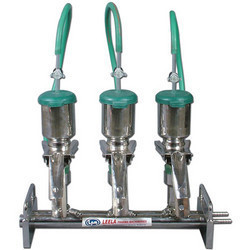
Tell us about your requirement

Price:
Quantity
Select Unit
- 50
- 100
- 200
- 250
- 500
- 1000+
Additional detail
Mobile number
Email

More Products in Laboratory Equipments Category

Rectangular Centrifuge Machine
Price 1300 INR / Piece
Minimum Order Quantity : 10 Pieces
Material : Mild Steel
Usage : Use For Hospital
Application : Chemical, Pharmaceutical, Food Processing and Laboratory Industries
Product Type : Machine
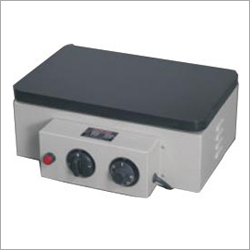
Hot Plate Rectangular
Price 1540 INR / Piece
Minimum Order Quantity : 10 Pieces
Material : Mild steel powder coated
Usage : Use For Industrial
Application : Good Working
Product Type : Hot Plate Rectangular
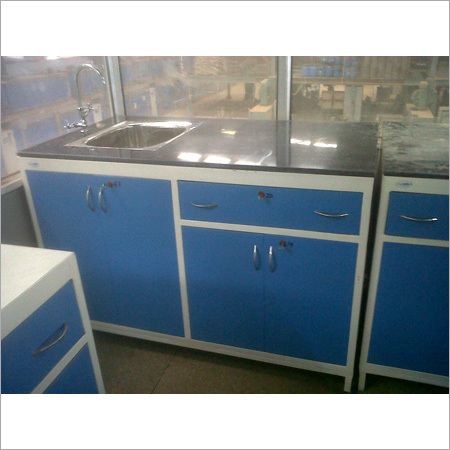
Laboratory Workbench
Price 50000 INR / Piece
Minimum Order Quantity : 10 Pieces
Material : Mild Steel
Usage : For Laboratory
Application : Laboratory Chemical Analysis, Research, Education
Product Type : Workbench
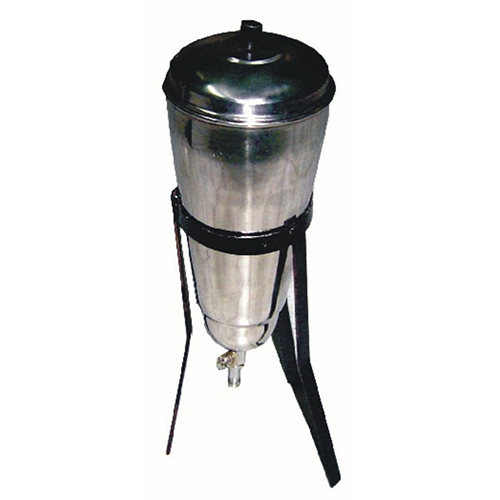
Lab Conical Percolator
Price 850.0 INR / Piece
Minimum Order Quantity : 10 Pieces
Material : Steel
Usage : Use For Industrial
Application : Good Working
Product Type : Conical Percolator


|

LABSOUL INDIA
GST : 06ALDPM6316K1Z1
GST : 06ALDPM6316K1Z1
Contact Details

- No. 20/B, Old Tribune Colony, Gate No. 5,Ambala Cantt - 133001, Haryana, India
- Phone :08045477371

- Mr. Mohit Mittal (Proprietor)
- Mobile :08045477371
- Send Inquiry
 Send Inquiry
 Send Inquiry
 Send SMS
 Call Me Free
LABSOUL INDIA
All Rights Reserved.(Terms of Use)
Developed and Managed by Infocom Network Private Limited.
Developed and Managed by Infocom Network Private Limited.

