


 English
 Spanish
 French
 German
 Italian
 Chinese (Simplified)
 Japanese
 Korean
 Arabic
 Portuguese

 Send Inquiry
Microprocessor Spectrophotometer
Price 40000 INR/ Piece
MOQ : 10 Pieces
Microprocessor Spectrophotometer Specification
- Features
- Auto Zero, Auto Blank, Direct Concentration Readout, Large Digital Display, Wavelength Adjustment
- Glass Type
- Quartz Cuvette Supported
- Display Type
- Digital LCD Display
- Control Type
- Microprocessor Based Control
- Shape
- Rectangular
- Power Supply
- 230 V AC, 50 Hz
- Accuracy
- 0.5%T
- Usage
- For Laboratory
- Type
- Microprocessor UV-Visible Spectrophotometer
- Dimension (L*W*H)
- 56 x 48 x 29 Centimeter (cm)
- Product Type
- Microprocesor
- Equipment Type
- Analytical Laboratory Instrument
- Weight
- 13-15 Kilograms (kg)
- Equipment Materials
- ABS Plastic, Powder Coated Metal
- Power
- AC 220V 10%, 50 Hz
- Voltage
- 220 V
- Material
- ABS Plastic and Stailness Steel
- Application
- Quantitative/Qualitative Analysis in Laboratories
- Weight
- Approx. 8 Kg
- Printer Interface
- External (optional)
- Light Source
- Tungsten Halogen Lamp
- Repeatability
- 0.2%T
- Wavelength Range
- 325 nm - 1000 nm
- Sample Compartment
- Holds Standard 10mm Path Length Cuvettes
- Measurement Modes
- Absorbance, Transmittance, Concentration
- Photometric Range
- -0.3 - 3.0 A
- Bandwidth
- 2 nm
- Detector
- Silicon Photodiode
- Stability
- 0.002 A/h @ 500 nm
- Data Storage
- Stores up to 100 Sets of Data
- Stray Light
- 0.3%T @ 360 nm
Microprocessor Spectrophotometer Trade Information
- Minimum Order Quantity
- 10 Pieces
- Payment Terms
- Cash in Advance (CID), Cash Advance (CA)
- Supply Ability
- 1000 Pieces Per Month
- Delivery Time
- 1 Week
- Main Export Market(s)
- Western Europe, Asia, Australia, North America, Eastern Europe, Middle East, South America, Central America, Africa
- Main Domestic Market
- All India
About Microprocessor Spectrophotometer
Double Beam UV Visible Spectrophotometer (with 8 cell Holder)
Offered comes with wavelength range of 190-1100 nm, spectral bandwidth of 1 nm, working mode of T,A,C,E and double beam based optical system. Further, the system can deliver fast, medium and slow scanning speeds and have other support options including glass cells, quartz cells, fuse, instrument cover, software CD, USB CABLE cable and operation manual. Some of the other standard range of the system includes photometric range of -0.3 - 3.5 A, 0 to 220 %T, wavelength accuracy of +0.3 nm, wavelength reproducibility of < 0.10 nm as well as photometric accuracy of + 0.3% T (0-100% T) & +0.002 A (0-0.1 A) among others.
Technical Specifications:-
| Wavelength Range | 190-1100 nm |
| Spectral Bandwidth | 1 nm |
| Working Mode | T,A,C,E |
| Optical System | Double beam |
| Scanning Speed | Fast / Medium / Slow |
| Photometric Range | -0.3 - 3.5 A, 0 to 220 %T |
| Wavelength Accuracy | +0.3 nm |
| Wavelength Reproducibility | < 0.10 nm |
| Photometric Accuracy | + 0.3% T (0-100% T) |
| Photometric Reproducibility | < 0.15 % T |
| Stray Light | < 0.1% T (Nal. 220nm, NaNO2 340 nm) |
| Baseline Flatness | + 0.002 A |
| Stability | < 0.001A/h (at 500 nm, after warming up) |
| Noise | +0.001A (at 500 nm, after warming up) |
| Detector | Dual Silicon Photodiode |
| Display | 6 inches high light blue LCD |
| Power | AC:220V + 10%, 50 Hz. |
| Dimensions | 630 x 470 x 210 mm |
| Weight | 26 Kg |
| Glass Cells | 16 No. |
| Quartz Cells | 4 Nos. |
| Fuse | 3 Nos. |
| Instrument Cover | 1 No. |
| Software CD | 1 No. |
| USB Cable | 1 No. |
| Operation Manual | 1 No. |
Precision Measurements and Ease of Use
This spectrophotometer is engineered for accurate and repeatable sample analysis. The digital LCD display and auto zero/blank features simplify the setup and increase efficiency. With absorbance, transmittance, and concentration measurement modes, users can perform a wide range of tests with clear, direct data readouts, making it practical for both routine and specialized laboratory work.
Robust Construction and Versatile Application
Constructed from ABS plastic and stainless steel, the instrument offers robust durability for frequent use in laboratories. Its compatibility with quartz cuvettes and external printer interfaces enhances usability. Ideal for quantitative and qualitative analysis, its broad wavelength range accommodates diverse analytical requirements in chemical, biological, and industrial research.
FAQ's of Microprocessor Spectrophotometer:
Q: How is the Microprocessor Spectrophotometer typically used in laboratory analysis?
A: This spectrophotometer is commonly used for both quantitative and qualitative analysis of samples. It can accurately measure absorbance, transmittance, and concentration, making it suitable for chemical, biological, and industrial laboratory settings.Q: What are the benefits of using this spectrophotometer for routine laboratory testing?
A: Key benefits include high measurement precision (accuracy of 0.5%T), excellent stability (0.002 A/h @ 500 nm), ease of use with auto zero/blank features, and the ability to store up to 100 sets of data, streamlining repetitive sample analyses.Q: When should I select this model for my laboratory?
A: Choose this model when you need precise UV-Visible measurements within the 325-1000 nm range, require reliable repeatability (0.2%T) for repetitive testing, and value user-friendly controls with data storage capabilities for research or quality control labs.Q: What is the process for operating the instrument during sample analysis?
A: Place your sample in a standard 10 mm quartz cuvette, set the desired wavelength and mode (absorbance, transmittance, or concentration), auto zero or blank the instrument as needed, and initiate the measurement. Results are displayed directly on the digital LCD, with options for data storage or external printing.Q: Where can this spectrophotometer be installed or used?
A: This spectrophotometer is suitable for laboratories in educational, industrial, and research institutions. Its sturdy ABS plastic and stainless steel construction make it ideal for regular bench-top use indoors.Q: How does the microprocessor control system enhance instrument performance?
A: The microprocessor-based control system ensures precise parameter adjustments, enhances data reliability through automation (such as auto zero and blank functions), and simplifies operation, reducing the potential for user error.Q: What measurement modes does the spectrophotometer support?
A: This instrument supports absorbance, transmittance, and concentration modes, allowing flexibility for different types of laboratory analyses.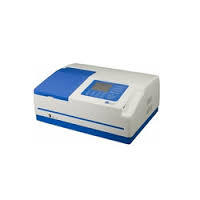
Tell us about your requirement

Price:
Quantity
Select Unit
- 50
- 100
- 200
- 250
- 500
- 1000+
Additional detail
Mobile number
Email

More Products in Analytical Instruments Category
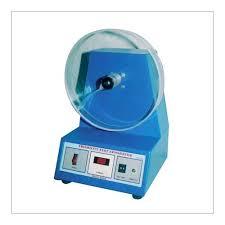
DIGITAL FRIABILITY TEST APPARATUS
Price 12000 INR / Piece
Minimum Order Quantity : 10 Pieces
Usage : For Laboratory
Type : Other, Digital Friability Test Apparatus
Material : Acrylic
Product Type : Apparatus
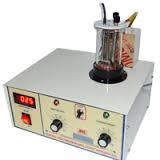
DIGITAL MELTING POINT APPARATUS
Price 1450 INR / Piece
Minimum Order Quantity : 10 Pieces
Usage : For Laboratory
Type : Other, Digital Melting Point Apparatus
Material : Mild Steel
Product Type : Apparatus
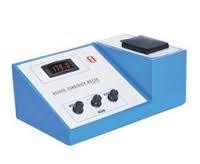
COND./TDS/SALT/TEM WATER PROOF METER
Price 2000 INR / Piece
Minimum Order Quantity : 10 Pieces
Usage : For Laboratory
Type : Other, COND./TDS/SALT/TEM WATER PROOF METER
Material : Stailness Steel and Plastic
Product Type : Water Proof Meter
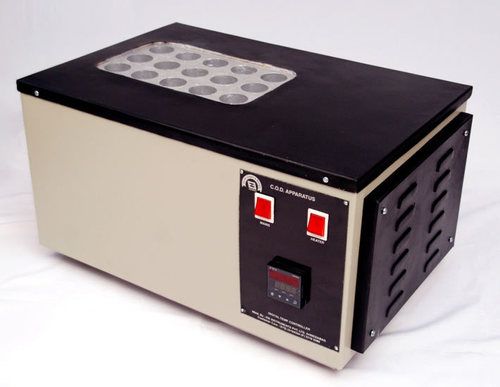
DIGITAL COD DIGESTION APPARATUS
Price 25500 INR / Piece
Minimum Order Quantity : 10 Pieces
Usage : Use For Industrial
Type : Other, COD DIGESTION APPARATUS
Material : Mild Steel
Product Type : COD DIGESTION APPARATUS


|

LABSOUL INDIA
GST : 06ALDPM6316K1Z1
GST : 06ALDPM6316K1Z1
Contact Details

- No. 20/B, Old Tribune Colony, Gate No. 5,Ambala Cantt - 133001, Haryana, India
- Phone :08045477371

- Mr. Mohit Mittal (Proprietor)
- Mobile :08045477371
- Send Inquiry
 Send Inquiry
 Send Inquiry
 Send SMS
 Call Me Free
LABSOUL INDIA
All Rights Reserved.(Terms of Use)
Developed and Managed by Infocom Network Private Limited.
Developed and Managed by Infocom Network Private Limited.

