


 English
 Spanish
 French
 German
 Italian
 Chinese (Simplified)
 Japanese
 Korean
 Arabic
 Portuguese

 Send Inquiry
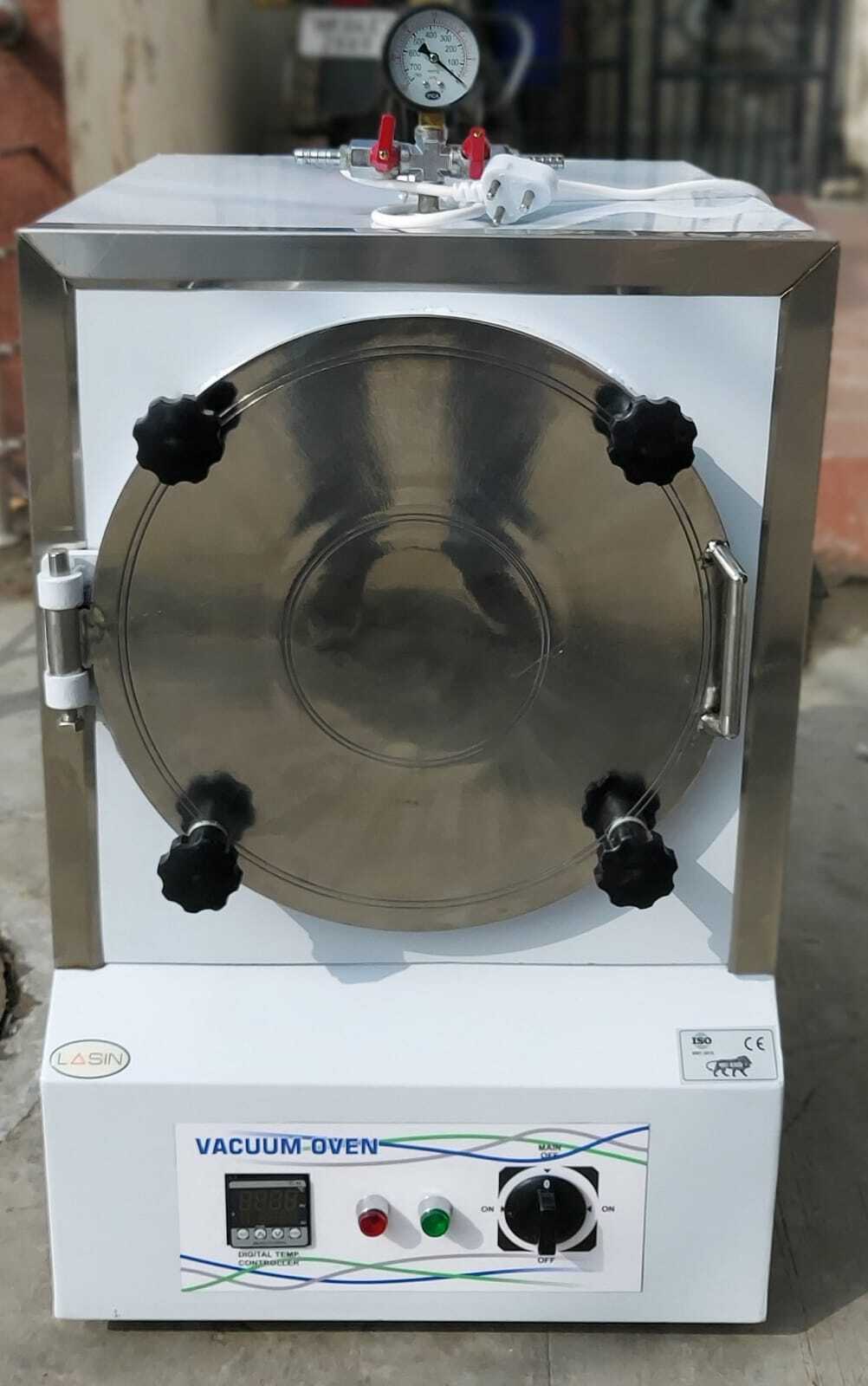
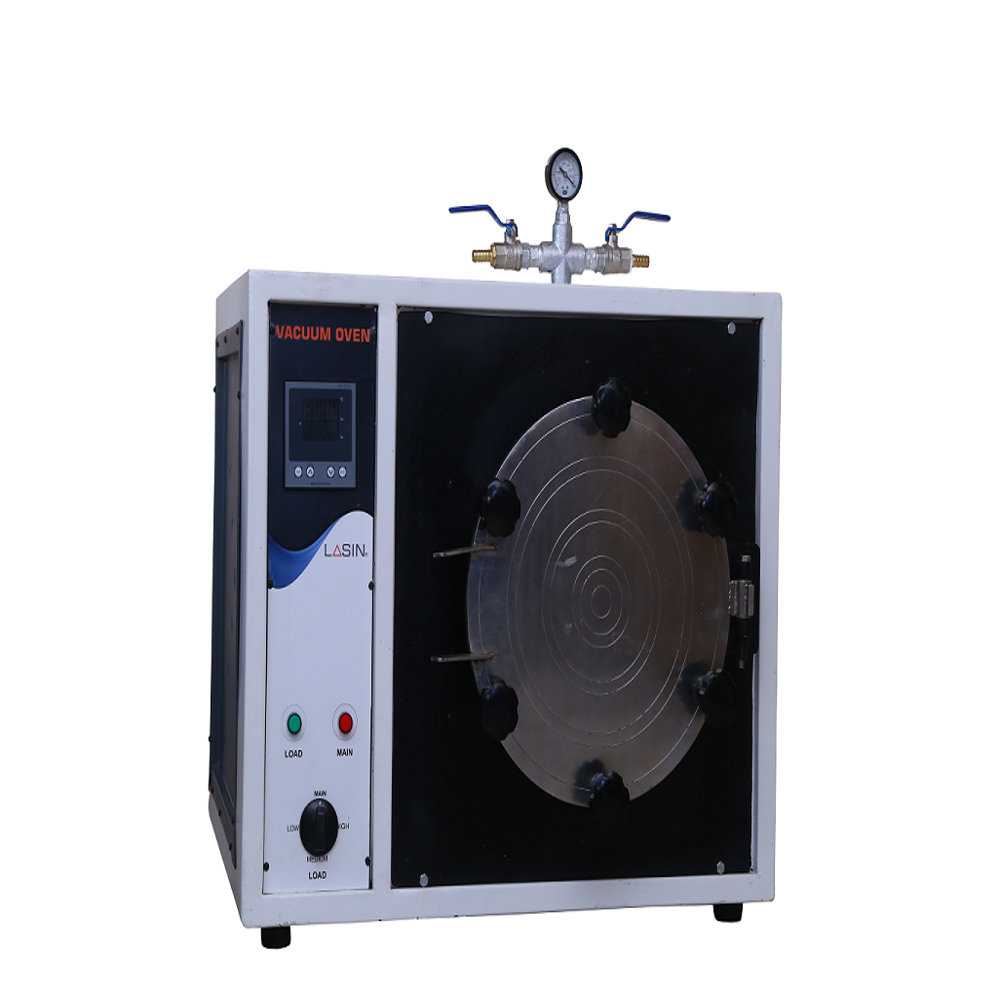
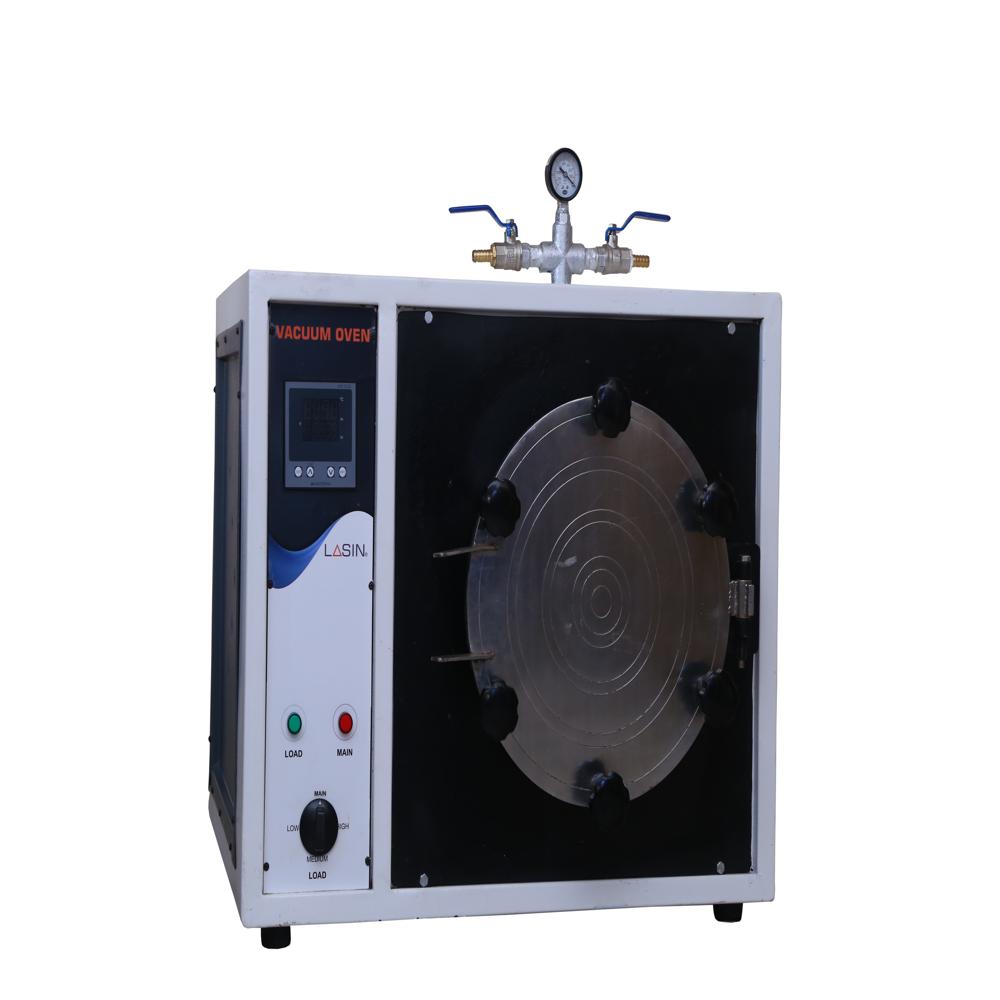
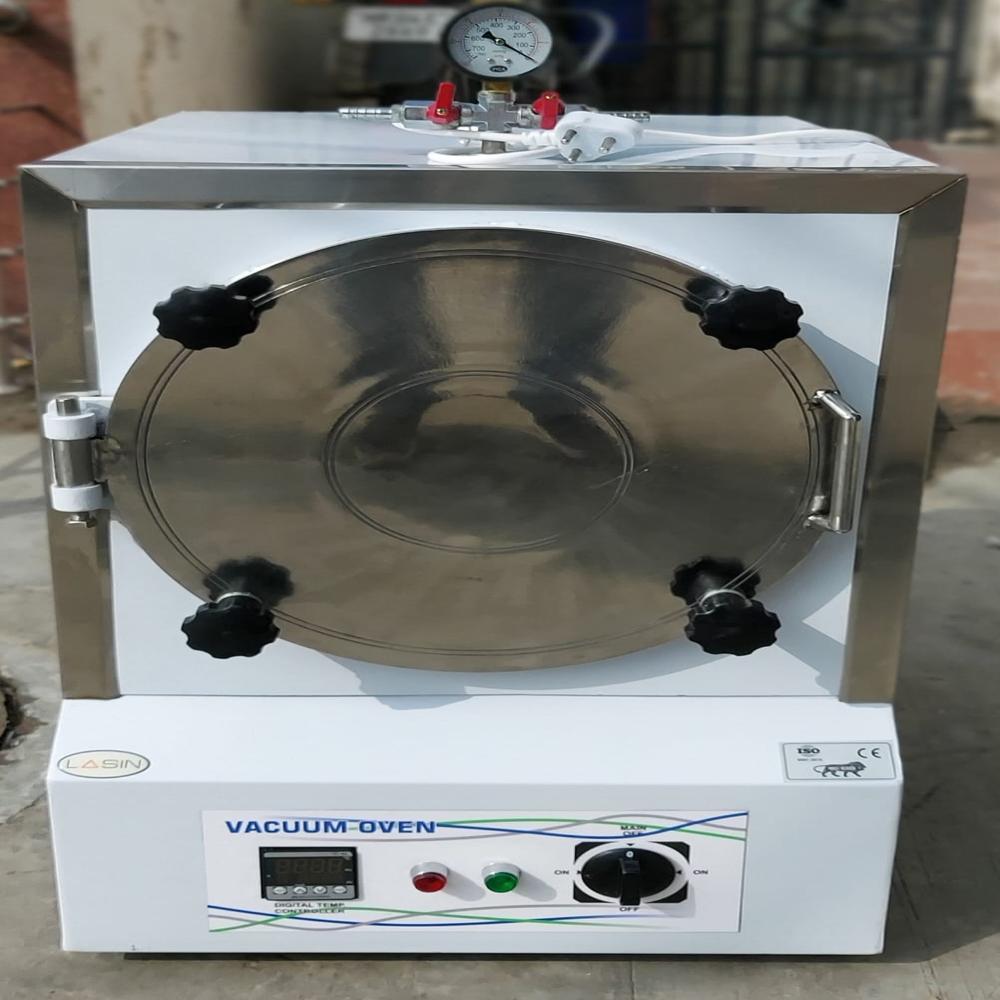
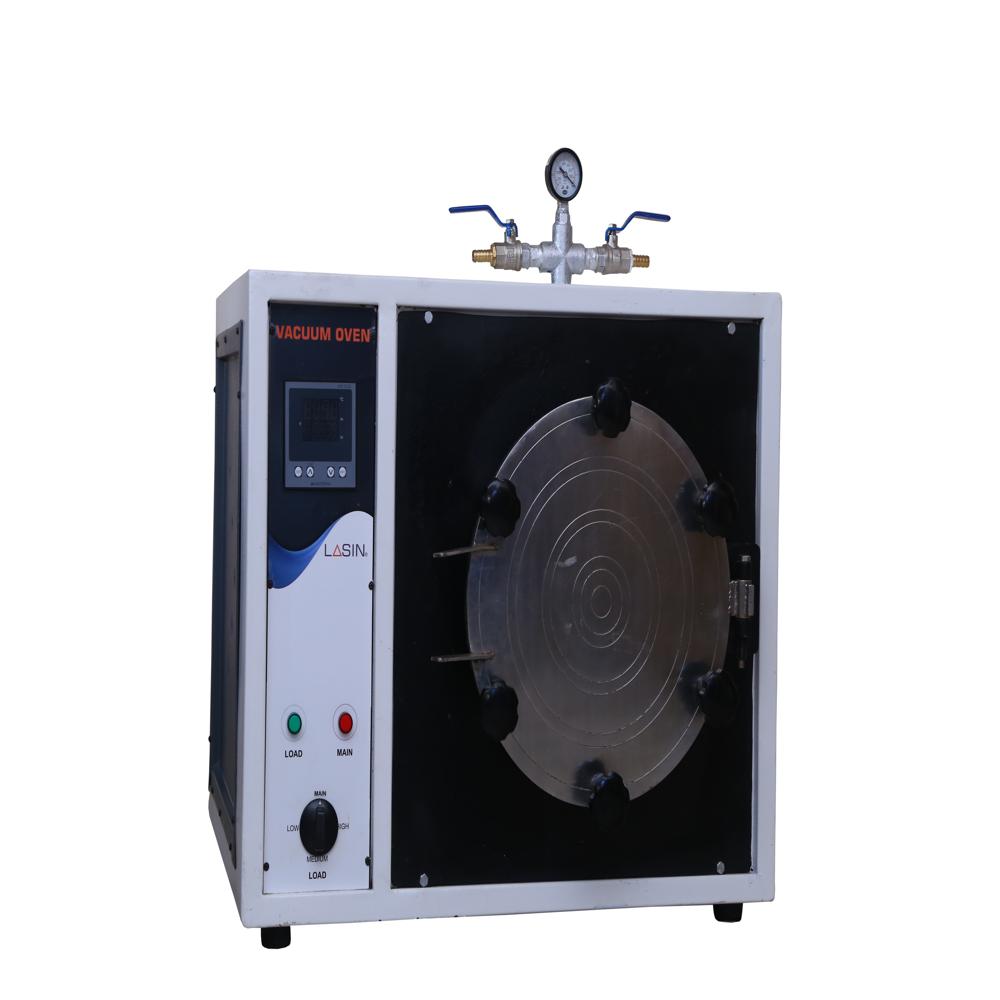
VACUUM OVEN Laboratory
Price 32000.0 INR/ Piece
MOQ : 1 Piece
VACUUM OVEN Laboratory Specification
- Heating Capacity
- 2 Kilowatt (kW)
- Display Type
- digital panel
- Control Type
- digital PID
- Accuracy
- 1 °C
- Features
- digital PID controller
- Shape
- cylinderical
- Usage
- For Heating Use
- Type
- Other
- Size
- 32 litre
- Dimension (L*W*H)
- 24x24x24 Inch (in)
- Height
- 36 Inch (in)
- Product Type
- Vacuum Oven
- Weight
- 45 Kilograms (kg)
- Color
- white / black
- Power
- 2000 Watt (w)
- Width
- 24 Inch (in)
- Length
- 24 Inch (in)
- Voltage
- 220-380 Volt (v)
- Material
- Steel
- Application
- Lab
- Warranty
- 1 year
VACUUM OVEN Laboratory Trade Information
- Minimum Order Quantity
- 1 Piece
- FOB Port
- new delhi
- Payment Terms
- Cash in Advance (CID)
- Supply Ability
- 10 Pieces, Piece Per Month
- Delivery Time
- 1 Week
- Sample Available
- Yes
- Sample Policy
- Contact us for information regarding our sample policy
- Packaging Details
- wooden crate packing
- Main Export Market(s)
- Asia, Australia, Central America, North America, South America, Eastern Europe, Western Europe, Middle East, Africa
- Main Domestic Market
- All India
- Certifications
- ISO, CE, NSIC , MSME, ZED
About VACUUM OVEN Laboratory
Vacuum Oven
A vacuum oven is a specialized laboratory and industrial equipment designed for drying, curing, and heat treatment processes under controlled temperature and vacuum conditions. By operating under reduced pressure, it allows solvents and moisture to evaporate at lower temperatures, preventing damage to delicate or heat-sensitive materials.
Key Features:
-
Temperature Range: Ambient +10C to 200C (varies with model).
-
Vacuum Range: Up to 1 mbar (depending on pump and model).
-
Construction: Double-walled stainless steel chamber with toughened glass viewing window for observation.
-
Heating System: Uniform heating through high-quality elements ensuring stable temperature.
-
Control System: Digital PID temperature controller with high accuracy.
-
Safety: Equipped with over-temperature protection and vacuum release valve.
Applications:
Widely used in pharmaceuticals, research laboratories, electronics, biotechnology, and material testing, a vacuum oven is ideal for:
-
Drying delicate samples without oxidation.
-
De-gassing and curing of polymers.
-
Removing moisture from heat-sensitive materials.
-
Heat treatment of electronic components.
Precision Heating for Laboratory Applications
Engineered for laboratory use, the vacuum oven delivers consistent and accurate heating. The advanced digital PID controller maintains a precise temperature environment, which is critical for experiments and material processing. Its spacious 32-litre chamber is ideal for uniform sample distribution.
Reliable and Durable Construction
Crafted from quality steel, the oven is designed for longevity and safety. The cylindrical shape and integrated insulation enhance performance while minimizing heat loss. The sturdy build, combined with a user-friendly digital panel, ensures seamless daily operation in professional laboratories.
Versatile Use for Diverse Needs
This vacuum oven is versatile, supporting a variety of laboratory heating requirements such as drying, curing, and sample preparation. Operating efficiently with a power range of 2000 watts and accommodating voltages from 220 to 380V, it meets global standards for research and industrial applications.
FAQ's of VACUUM OVEN Laboratory:
Q: How does the digital PID controller enhance temperature accuracy in the vacuum oven?
A: The digital PID controller continuously monitors and automatically adjusts the temperature, maintaining accuracy within 1C. This precision is essential for reproducibility and optimal results in laboratory processes requiring controlled heating.Q: What is the process for using the vacuum oven in laboratory applications?
A: To use the oven, place your samples inside the 32-litre chamber, set the desired parameters through the digital display panel, and start the heating cycle. The oven creates a vacuum environment, allows controlled heating, and prevents oxidation or contamination during sample processing.Q: When is a vacuum oven preferred over a conventional oven in laboratories?
A: A vacuum oven is chosen when precise temperature control and contaminant-free heating are necessary, such as in sensitive drying or curing processes. It is especially beneficial when working with materials that degrade or react adversely with oxygen or moisture.Q: Where is the vacuum oven manufactured and supplied from?
A: The vacuum oven is manufactured, exported, and supplied from India, supporting both domestic and international laboratories with high-quality laboratory heating equipment.Q: What safety and durability features does the vacuum oven offer?
A: Constructed with steel and insulated to prevent heat loss, the oven's cylindrical shape and robust design ensure safety. The digital panel offers clear control, and the 1-year warranty backs its longevity.Q: What are the benefits of using this vacuum oven in laboratory settings?
A: The vacuum oven provides accurate, uniform heating, minimizes contamination risks, and simplifies operation with a digital interface. Its spacious chamber supports a variety of applications, making it ideal for research and industrial labs.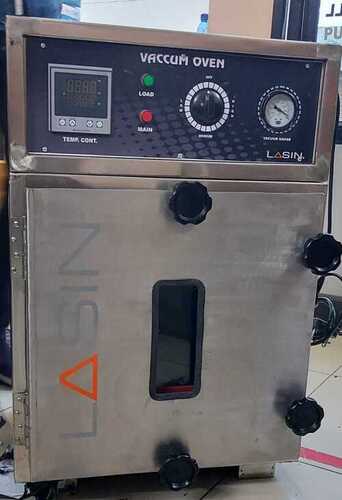
Tell us about your requirement

Price:
Quantity
Select Unit
- 50
- 100
- 200
- 250
- 500
- 1000+
Additional detail
Mobile number
Email

More Products in Heating And Cooling Equipment Category
HUMIDITY& TEMPERATURE CONTROL CABINET (REFRIGERATED)
Price 50000 INR / Unit
Minimum Order Quantity : 1 ,
Type : Other, Humidity & Temperature Control Cabinet (Refrigerated)
Equipment Materials : Stainless Steel (Inner Chamber), Powder Coated Mild Steel (Outer Body)
Shape : Rectangular
Usage : For Control Temprature
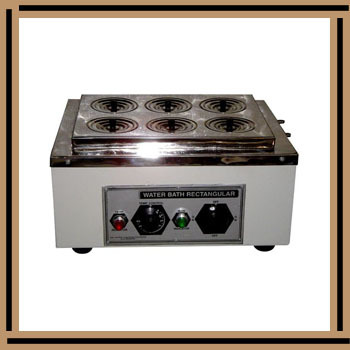
WATER BATH RECTANGULAR DOUBLE WALLED
Price 7000 INR / Unit
Minimum Order Quantity : 1 Unit
Type : Other, Rectangular Double Walled Water Bath
Equipment Materials : Stainless Steel inner chamber, outer body made of mild steel with powder coating
Shape : Rectangular
Usage : For Lab Use
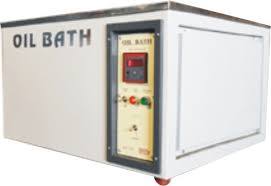
HIGH TEMPERATURE OIL BATH
Price 10000 INR / Unit
Minimum Order Quantity : 1 Unit
Type : Other, High Temperature Oil Bath
Equipment Materials : Stainless Steel inner chamber, Powder coated outer body
Shape : Rectangular
Usage : For Testing Use
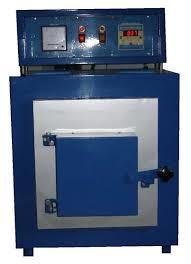
HIGH TEMPERATURE MUFFLE FURNACE
Price 189000 INR / Unit
Minimum Order Quantity : 1 ,
Type : Other, HIGH TEMPERATURE MUFFLE FURNACE
Equipment Materials : Heavy gauge Mild Steel (Outer), Ceramic insulation (Inner)
Shape : Rectangular
Usage : For Heating Use


|

LABSOUL INDIA
GST : 06ALDPM6316K1Z1
GST : 06ALDPM6316K1Z1
Contact Details

- No. 20/B, Old Tribune Colony, Gate No. 5,Ambala Cantt - 133001, Haryana, India
- Phone :08045477371

- Mr. Mohit Mittal (Proprietor)
- Mobile :08045477371
- Send Inquiry
 Send Inquiry
 Send Inquiry
 Send SMS
LABSOUL INDIA
All Rights Reserved.(Terms of Use)
Developed and Managed by Infocom Network Private Limited.
Developed and Managed by Infocom Network Private Limited.

