


 English
 Spanish
 French
 German
 Italian
 Chinese (Simplified)
 Japanese
 Korean
 Arabic
 Portuguese

 Send Inquiry
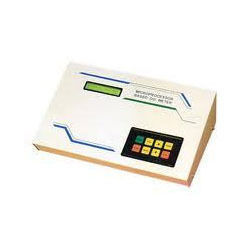
Microprocessor Flame Photometer
Price 45000 INR/ Piece
MOQ : 10 Pieces
Microprocessor Flame Photometer Specification
- Display Type
- Digital LED Display
- Shape
- Rectangular
- Features
- Automatic ignition, automatic air compressor, digital readout, simultaneous display of readings, printer port
- Temperature Resistance
- Up to 50C ambient
- Control Type
- Microprocessor Controlled
- Power Supply
- 230V AC, 50Hz
- Accuracy
- 2% (for Na and K at 100 ppm)
- Glass Type
- Borosilicate Glass Nebulizer
- Usage
- For Laboratory
- Type
- Microprocessor Flame Photometer
- Dimension (L*W*H)
- 365 x 245 x 220 Millimeter (mm)
- Product Type
- Microprocesor
- Equipment Type
- Lab Analytical Instrument
- Weight
- 9-12 Kilograms (kg)
- Equipment Materials
- Stainless steel body with powder coating
- Power
- 230V 10%, 50Hz AC
- Voltage
- 230V AC
- Material
- Stailness Steel
- Application
- Determination of Na, K, Ca, Li in solutions; Clinical, Soil, Pharmaceuticals, Food, and Beverage Analysis
- Measurement Range (Na)
- 0-100 ppm
- Aspiration Rate
- 5-6 ml/min
- Filters
- Interference filters for Na, K, Ca, Li
- Sample System
- Nebulizer and Mixing Chamber
- Drift
- Less than 2% per hour
- Printer Interface
- Yes
- Sensitivity
- Na: 0.2 ppm, K: 0.2 ppm
- Measurement Range (Ca)
- 0-100 ppm
- Measurement Range (Li)
- 0-100 ppm
- Safety
- Flame failure alarm and cutoff
- Repeatability
- < 1% Coefficient of Variation for 20 ppm Na/K
- Detector
- Photodiode/Photomultiplier Tube
- Calibration
- Automatic through Microprocessor
- Measurement Range (K)
- 0-100 ppm
Microprocessor Flame Photometer Trade Information
- Minimum Order Quantity
- 10 Pieces
- Payment Terms
- Cash in Advance (CID), Cash Advance (CA)
- Supply Ability
- 1000 Pieces Per Month
- Delivery Time
- 1 Week
- Main Export Market(s)
- Australia, North America, South America, Eastern Europe, Western Europe, Middle East, Central America, Asia, Africa
- Main Domestic Market
- All India
About Microprocessor Flame Photometer
Microprocessor Flame Photometer, Model- 0002 is an ideal instrument for the determination of sodium, Potassium, Calcium and Lithium. It uses the latest Microcontroller technology and advanced engineering techniques so as to give enhanced and reproducibility. It has soft touch membrane key for ease of operations. the solution is aspirated through an automiser, Air sample and the fuel are mixed in the mixing chamber which is then sprayed as a very fine mist into the flame. The color of the flame is changed depending upon the concentration of elements present. Radiations from the flame passes through the sensing system and specific narrow band interference filter which permits only the characteristic radiation to pass to the photo-detector. The output of the photo-detector is then processed by the microcontroller and the final results are displayed on the digital display. The System has 5-Point calibration facility and no linearity correction is provided through an automatic curve fitting software. Facility has been provided for re-standardization with a single standard, thereby, eliminating the need of the multiple standards once a calibration has been performed.
Features
- Microprocessor Based with Printer Interface
- Auto Gas Cutoff (Model - LSI 0002)
- Auto Flame Failure Detection
- Four Measurements in Single Aspiration
- Setup Storage Facility
- Sample Data Storage Facility
- Curve Calibration Programmability Using Maximum of 5 Standards
- Multiple Calibration Curve Saving Facility
- Data Processing Through Curve Fitting
- Techniques, Least Square, Quadratic
- Online Help Key
- Direct Results in ppm and meq
- Useful for Medical & Soil Testing
Advanced Analytical Capabilities
This flame photometer provides highly accurate and repeatable results for Na, K, Ca, and Li, with an automatic calibration system managed by a microprocessor. Its sensitivity of 0.2 ppm and digital LED readout enable precise detection, critical for clinical diagnostics, soil analysis, and food and beverage quality control.
User-Friendly Operation and Safety Features
Engineered for seamless laboratory integration, the photometer features automatic ignition, integrated air compressor, easy-to-use controls, and a safety flame failure cutoff. Simultaneous digital display and printer interface simplify documentation and enhance user experience.
Durable Construction and Robust Performance
Housed in a stainless steel body coated for durability, this instrument is built to endure rigorous laboratory conditions. With resistance to temperatures up to 50C and weighing 9-12 kg, it offers reliable, stable performance in a variety of research and industrial settings.
FAQ's of Microprocessor Flame Photometer:
Q: How does the microprocessor-controlled automatic calibration benefit users?
A: The automatic calibration ensures consistent accuracy and eliminates manual adjustment errors. Users can trust their results during routine analysis, making workflows efficient and reducing maintenance downtime.Q: What applications are suitable for this flame photometer?
A: This instrument is ideal for laboratories involved in clinical analysis, soil testing, pharmaceutical quality control, and food and beverage monitoring. Its capability to detect Na, K, Ca, and Li makes it versatile for multiple industries.Q: When should the flame photometer be recalibrated or serviced?
A: It is recommended to recalibrate the instrument whenever there's a change in standards, after extensive use, or if accuracy seems compromised. Regular servicing based on manufacturer guidelines ensures optimal performance.Q: Where can this instrument be installed for best performance?
A: Install the flame photometer in a well-ventilated laboratory, away from direct heat sources and corrosive environments. Ensure ambient temperatures stay within the resistant range (up to 50C) for prolonged instrument life.Q: What is the process for performing a typical analysis with this photometer?
A: The process involves aspirating the sample via a nebulizer, automatically igniting the flame, and using microprocessor-guided measurement. Results are displayed digitally and can be printed directly for documentation.Q: How does the instrument ensure safety during operation?
A: Safety is prioritized with a flame failure alarm system that automatically cuts off the gas supply, reducing risk during flame instability. The robust stainless steel body further enhances laboratory safety.Q: What are the key benefits compared to standard flame photometers?
A: Key benefits include increased accuracy, digital data display, printer connectivity for easy record-keeping, automatic calibration, safety features, and durable construction suited to demanding laboratory use.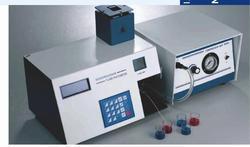
Tell us about your requirement

Price:
Quantity
Select Unit
- 50
- 100
- 200
- 250
- 500
- 1000+
Additional detail
Mobile number
Email

More Products in Analytical Instruments Category
DIGITAL SPECTROPHOTOMETER
Price 60000 INR / Piece
Minimum Order Quantity : 10 Pieces
Material : Stailness Steel
Product Type : Spectrophotometer
Voltage : 230V AC 10%, 50Hz
Usage : For Laboratory
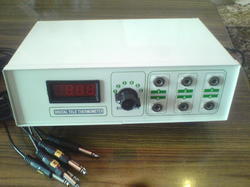
Digital Tele Thermometer
Price 5500 INR / Piece
Minimum Order Quantity : 10 Pieces
Material : Mild Steel.
Product Type : Thermometer
Voltage : 1.5V DC (Battery)
Usage : For Laboratory
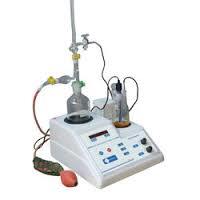
AUTO KARL FISCHER TITRIMETER
Price 15000 INR / Piece
Minimum Order Quantity : 10 Pieces
Material : Mild steel
Product Type : FISCHER TITRIMETER
Voltage : 220240 Volt (v)
Usage : Use For Industrial
MICROPROCESSOR DISSOLVED OXYGEN METER
Price 18000 INR / Piece
Minimum Order Quantity : 10 Pieces
Material : Mild steel
Product Type : MICROPROCESSOR DISSOLVED OXYGEN METER
Voltage : 220240 Volt (v)
Usage : Use For Industrial


|

LABSOUL INDIA
GST : 06ALDPM6316K1Z1
GST : 06ALDPM6316K1Z1
Contact Details

- No. 20/B, Old Tribune Colony, Gate No. 5,Ambala Cantt - 133001, Haryana, India
- Phone :08045477371

- Mr. Mohit Mittal (Proprietor)
- Mobile :08045477371
- Send Inquiry
 Send Inquiry
 Send Inquiry
 Send SMS
 Call Me Free
LABSOUL INDIA
All Rights Reserved.(Terms of Use)
Developed and Managed by Infocom Network Private Limited.
Developed and Managed by Infocom Network Private Limited.

