


 English
 Spanish
 French
 German
 Italian
 Chinese (Simplified)
 Japanese
 Korean
 Arabic
 Portuguese

 Send Inquiry
Double Beam Spectrophotometer
Price 35000 INR/ Piece
MOQ : 10 Pieces
Double Beam Spectrophotometer Specification
- Display Type
- Large LCD Display
- Temperature Resistance
- Suitable for laboratory ambient temperatures
- Accuracy
- 0.3 nm (Wavelength Accuracy)
- Glass Type
- Quartz / Optical Glass Cuvette
- Control Type
- Microprocessor-based
- Power Supply
- 220V AC
- Shape
- Rectangular
- Features
- USB Interface, Data storage, PC connectivity, Automatic wavelength calibration, User-friendly interface, Pre-set and user methods
- Usage
- For Laboratory
- Type
- Double Beam
- Dimension (L*W*H)
- 590 x 455 x 250 Millimeter (mm)
- Product Type
- Spectrophotometer
- Weight
- 15-20 Kilograms (kg)
- Equipment Type
- UV-Visible Double Beam Spectrophotometer
- Equipment Materials
- Powder coated metal body with high-grade plastic components
- Power
- 120W
- Voltage
- 220V AC 10%, 50Hz
- Material
- ABS Plastic and Stailness Steel
- Application
- Qualitative and quantitative analysis in laboratories, pharmaceuticals, chemical industries, educational and research institutions
- Detector
- Silicon Photodiode
- Photometric Range
- -0.3 - 3.0 A, 0 - 200%T
- Stray Light
- 0.05%T at 220 nm & 360 nm
- Wavelength Repeatability
- 0.2 nm
- Optical System
- Double Beam, Grating 1200 lines/mm
- Data Output
- USB interface, Parallel port (printer) and RS232
- Scanning Speed
- Fast / Medium / Slow selectable
- Photometric Accuracy
- 0.3%T
- Spectral Bandwidth
- 1 nm
- Operating Humidity
- 85% RH (Non-condensing)
- Wavelength Range
- 190 nm to 1100 nm
- Light Source
- Deuterium & Tungsten Halogen Lamps
- Weight
- Approx. 12 kg
- Software
- PC software for advanced data analysis and storage
- Sample Compartment
- 10 mm path length cuvette holder
Double Beam Spectrophotometer Trade Information
- Minimum Order Quantity
- 10 Pieces
- Payment Terms
- Cash in Advance (CID), Cash Advance (CA)
- Supply Ability
- 1000 Pieces Per Month
- Delivery Time
- 1 Week
- Main Export Market(s)
- Western Europe, Asia, Australia, North America, South America, Eastern Europe, Middle East, Central America, Africa
- Main Domestic Market
- All India
About Double Beam Spectrophotometer
Double Beam UV Visible Spectrophotometer (with 8 cell Holder)
Offered comes with wavelength range of 190-1100 nm, spectral bandwidth of 1 nm, working mode of T,A,C,E and double beam based optical system. Further, the system can deliver fast, medium and slow scanning speeds and have other support options including glass cells, quartz cells, fuse, instrument cover, software CD, USB CABLE cable and operation manual. Some of the other standard range of the system includes photometric range of -0.3 - 3.5 A, 0 to 220 %T, wavelength accuracy of +0.3 nm, wavelength reproducibility of < 0.10 nm as well as photometric accuracy of + 0.3% T (0-100% T) & +0.002 A (0-0.1 A) among others.
Technical Specifications:-
| Wavelength Range | 190-1100 nm |
| Spectral Bandwidth | 1 nm |
| Working Mode | T,A,C,E |
| Optical System | Double beam |
| Scanning Speed | Fast / Medium / Slow |
| Photometric Range | -0.3 - 3.5 A, 0 to 220 %T |
| Wavelength Accuracy | +0.3 nm |
| Wavelength Reproducibility | < 0.10 nm |
| Photometric Accuracy | + 0.3% T (0-100% T) |
| Photometric Reproducibility | < 0.15 % T |
| Stray Light | < 0.1% T (Nal. 220nm, NaNO2 340 nm) |
| Baseline Flatness | + 0.002 A |
| Stability | < 0.001A/h (at 500 nm, after warming up) |
| Noise | +0.001A (at 500 nm, after warming up) |
| Detector | Dual Silicon Photodiode |
| Display | 6 inches high light blue LCD |
| Power | AC:220V + 10%, 50 Hz. |
| Dimensions | 630 x 470 x 210 mm |
| Weight | 26 Kg |
| Glass Cells | 16 No. |
| Quartz Cells | 4 Nos. |
| Fuse | 3 Nos. |
| Instrument Cover | 1 No. |
| Software CD | 1 No. |
| USB Cable | 1 No. |
| Operation Manual | 1 No. |
Advanced Optical Precision
Equipped with a double beam optical system and high-resolution grating (1200 lines/mm), this spectrophotometer ensures excellent sensitivity and accuracy across a wide wavelength spectrum. The device is designed to minimize stray light and achieve precise wavelength and photometric measurements to support advanced laboratory applications.
User-Friendly & Versatile Operation
With microprocessor-based controls, a large LCD display, and intuitive software, this spectrophotometer offers ease of use for both preset and custom analysis methods. Data can be conveniently exported via USB, parallel port, or RS232, supporting efficient data storage, sharing, and reporting for laboratory workflows.
Robust Construction & Laboratory Adaptability
Built with durable powder-coated metal and high-grade plastic, the instrument is suited for rigorous laboratory environments. Its compact, rectangular design, temperature resistance, and compatibility with 220V AC power make it an excellent fit for diverse laboratory settings in education, research, and industry.
FAQ's of Double Beam Spectrophotometer:
Q: How does the double beam optical system enhance measurement accuracy in this spectrophotometer?
A: The double beam optical system continuously compares the sample and reference paths, reducing baseline drift and compensating for lamp fluctuations. This design ensures high measurement stability and reproducibility, vital for reliable qualitative and quantitative analyses.Q: What types of samples can be analyzed using this spectrophotometer?
A: This spectrophotometer is suitable for a variety of samples, including liquids and solutions in laboratory-grade quartz or optical glass cuvettes (10 mm path length). It's extensively used in pharmaceuticals, chemical analysis, research institutions, and educational laboratories for both routine and advanced experiments.Q: When should I use the fast, medium, or slow scanning speeds?
A: Scan speed selection depends on your application: fast scans for quick sample screening, medium for routine measurements, and slow to maximize data point resolution and accuracy in research or when analyzing complex spectra.Q: Where can the collected data be output or stored?
A: Data from the spectrophotometer can be exported via the USB interface, printed using the parallel port, or transmitted over RS232. Additionally, the included PC software allows for advanced data analysis, secure storage, and efficient data management on laboratory computers.Q: What are the benefits of the automatic wavelength calibration feature?
A: Automatic wavelength calibration streamlines setup and ensures measurements are consistently accurate, reducing user error and saving time. This improves the reliability of experimental results and facilitates standardized measurements.Q: How is the spectrophotometer constructed to ensure durability in laboratory settings?
A: The device is built with a robust powder-coated metal body, combined with high-grade ABS plastic components. It is resistant to laboratory ambient temperatures and suitable for high-humidity environments (up to 85% RH, non-condensing), ensuring long-term durability and stable operation.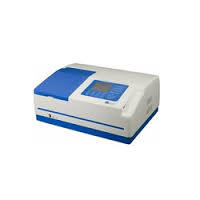
Tell us about your requirement

Price:
Quantity
Select Unit
- 50
- 100
- 200
- 250
- 500
- 1000+
Additional detail
Mobile number
Email

More Products in Analytical Instruments Category
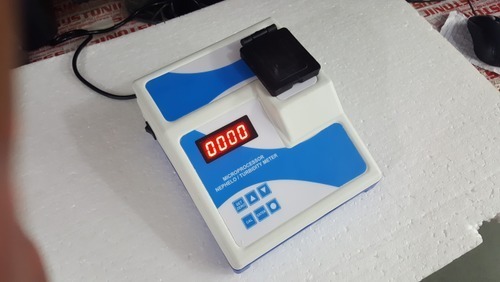
DIGITAL TURBIDITY METER
Price 5000 INR / Piece
Minimum Order Quantity : 10 Pieces
Usage : For Laboratory
Type : Other, Digital Turbidity Meter
Application : Measurement of turbidity in water and waste water
Product Type : Tubidity Meter
DIGITAL SPECTROPHOTOMETER
Price 60000 INR / Piece
Minimum Order Quantity : 10 Pieces
Usage : For Laboratory
Type : Other, Digital Spectrophotometer
Application : Quantitative analysis in laboratories, research, and quality control
Product Type : Spectrophotometer
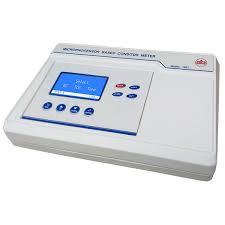
MICROPROCESSOR CONDUCTIVITY/TDS METER
Price 18000 INR / Piece
Minimum Order Quantity : 10 Pieces
Usage : Use For Industrial
Type : Other, CONDUCTIVITY/TDS METER
Application : Good looking
Product Type : CONDUCTIVITY/TDS METER
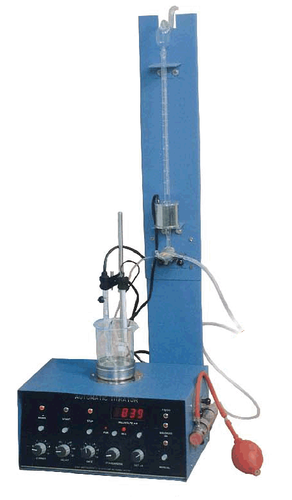
Digital Potentiometric Titrator
Price 10000 INR / Piece
Minimum Order Quantity : 10 Pieces
Usage : Use For Industrial
Type : Other, POTENTIOMETRIC TITRATOR
Application : Good looking
Product Type : POTENTIOMETRIC TITRATOR


|

LABSOUL INDIA
GST : 06ALDPM6316K1Z1
GST : 06ALDPM6316K1Z1
Contact Details

- No. 20/B, Old Tribune Colony, Gate No. 5,Ambala Cantt - 133001, Haryana, India
- Phone :08045477371

- Mr. Mohit Mittal (Proprietor)
- Mobile :08045477371
- Send Inquiry
 Send Inquiry
 Send Inquiry
 Send SMS
LABSOUL INDIA
All Rights Reserved.(Terms of Use)
Developed and Managed by Infocom Network Private Limited.
Developed and Managed by Infocom Network Private Limited.

