


 English
 Spanish
 French
 German
 Italian
 Chinese (Simplified)
 Japanese
 Korean
 Arabic
 Portuguese

 Send Inquiry
CONICAL PERCOLATOR
Price 4500 INR/ Piece
MOQ : 10 Pieces
CONICAL PERCOLATOR Specification
- Control Type
- Manual
- Heating Capacity
- Suitable for Moderate Heating
- Temperature Resistance
- Up to 300C
- Accuracy
- Laboratory Grade
- Shape
- Conical
- Features
- Uniform Percolation, Chemically Resistant, Reusable, Robust Construction
- Glass Type
- Clear Borosilicate
- Usage
- For Laboratory
- Type
- Conical Percolator
- Dimension (L*W*H)
- As per customer requirement
- Product Type
- CONICAL PERCOLATOR
- Equipment Type
- Laboratory Glassware
- Weight
- 10-20 Kilograms (kg)
- Equipment Materials
- Borosilicate Glass
- Material
- Stailness Steel
- Application
- Laboratory Percolation and Filtration
- Capacity (Ltr)
- Available in 1, 2, 5, 10, 20, 25 Ltr Sizes
- Compatibility
- Suitable with Common Laboratory Apparatus
- Outlet
- Fitted with Glass Stopcock
- Lid Type
- Removable Glass Lid
- Autoclavable
- Yes
- Mounting
- Tabletop
- Cleaning
- Easy to Clean and Sterilize
- Usage
- Ideal for Extraction, Filtration, and Percolation of Liquids
- Transparency
- High
CONICAL PERCOLATOR Trade Information
- Minimum Order Quantity
- 10 Pieces
- Payment Terms
- Cash in Advance (CID), Cash Advance (CA)
- Supply Ability
- 10 Pieces Per Month
- Delivery Time
- 1 Week
- Main Export Market(s)
- Western Europe, Asia, Australia, Middle East, South America, Central America, Eastern Europe, North America, Africa
- Main Domestic Market
- All India
About CONICAL PERCOLATOR
These percolators are furnished with top channel rooster which is upheld on a tempered steel strainer on 3-legged stand. Funnel shaped Percolator is comprised of tempered steel. Our percolator is generally utilized in lab tests which are directed for research as well as in showing purposes in institutional and research focuses.
Highlights of CONICAL PERCOLATOR :
- Exact Aspect.
- Hostile to Destructive Body.
- Long Help Life.
- Basic and Protected being used.
FAQs of CONICAL PERCOLATOR:
What is percolator drug store?
A device for the extraction of a medication with a fluid dissolvable by descending uprooting.
What is the course of permeation?
Permeation extraction is a regular extraction strategy utilized in the handling of customary Chinese drugs. After restorative material powder is set in a permeation tank, the extraction dissolvable is constantly added, and permeation separate is gathered all the while.
How does a percolator function?
How Does a Percolator Function? Percolators have two loads: a lower chamber for the water and an upper region with a bin to house the ground espresso beans. As the water warms, constrained through an upward tube disregards it the espresso beans prior to trickling back to the lower part of the pot.
Robust and Transparent Design
Built from clear borosilicate glass and stainless steel, the Conical Percolator provides both high visibility and excellent chemical resistance. Its robust construction withstands daily laboratory use and repeated heating up to 300C, while the transparency enables easy observation during experiments.
Flexible Laboratory Applications
Designed for laboratory-scale percolation and filtration tasks, this percolator is suitable for use with a wide spectrum of common laboratory setups. Its range of capacities and compatibility with standard apparatus make it ideal for research, educational, or industrial lab environments.
User-Friendly Features for Efficiency
The removable glass lid facilitates easy access and cleaning, while the glass stopcock ensures precise control of outlet flow. The unit is autoclave-friendly and simple to sterilize, promoting a consistently high level of laboratory hygiene and safety.
FAQ's of CONICAL PERCOLATOR:
Q: How do I clean and sterilize the Conical Percolator?
A: The Conical Percolator is designed for easy cleaning and sterilization. Its removable glass lid provides easy access for thorough washing, and both glass and stainless steel parts are fully autoclavable for high-temperature sterilization, ensuring laboratory safety.Q: What is the process for using the percolator in laboratory filtration?
A: Simply place the sample material into the conical chamber, add the desired solvent, and cover with the removable glass lid. The percolator ensures uniform solvent flow, and the fitted glass stopcock allows you to control liquid discharge precisely for effective filtration or percolation.Q: When should I use this percolator instead of traditional filtration equipment?
A: This conical percolator is ideal when you require uniform solvent distribution and visibility during percolation or filtration processes. Its robust design and high resistance to chemicals and heat makes it especially suitable for laboratory settings handling complex or sensitive experiments.Q: What are the benefits of a glass stopcock outlet?
A: A glass stopcock enables precise, manual control over the release of filtered liquids. This provides greater accuracy and minimizes contamination risk, especially important in quantitative laboratory procedures.Q: Where can the Conical Percolator be installed in the laboratory?
A: This equipment is designed for tabletop mounting, making it suitable for lab benches or dedicated workstations. Its compatibility with standard laboratory apparatus ensures seamless integration into most laboratory setups.Q: How does the conical shape enhance percolation efficiency?
A: The conical design promotes uniform distribution and efficient movement of liquids through the sample material, resulting in more consistent extraction and filtration outcomes during laboratory processes.Q: What laboratory requirements are supported in terms of capacity and material compatibility?
A: Available in a range of capacities from 1 to 25 liters, the percolator accommodates diverse laboratory needs. Constructed from high-grade borosilicate glass and stainless steel, it is compatible with common laboratory apparatus and resists chemical corrosion and thermal shock.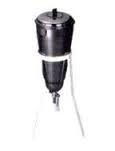
Tell us about your requirement

Price:
Quantity
Select Unit
- 50
- 100
- 200
- 250
- 500
- 1000+
Additional detail
Mobile number
Email

More Products in Pharmaceutical Equipment Category
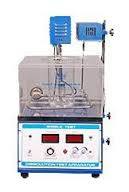
DISSOLUTION RATE TEST APPARATUS (ELECTRICALLY OPERATED
Price 4500 INR / Piece
Minimum Order Quantity : 10 Pieces
Features : Stirrer speed control, temperature control, auto timer, sturdy construction
Material : Stailness Steel
Usage : For Laboratory
Equipment Type : Pharmaceutical Lab Instrument
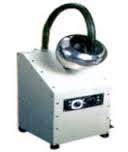
TABLET COATING PAN UNIT WITH HOT AIR BLOWER (SS DIA 8
Price 64000 INR / Piece
Minimum Order Quantity : 10 Pieces
Features : Detachable pan, uniform coating, easy cleaning, durable finish, efficient air flow
Material : Stailness Steel
Usage : For Laboratory
Equipment Type : Coating Unit
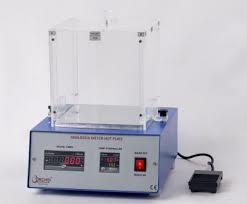
EDDY'S HOT PLATE TYPE
Price 8600 INR / Piece
Minimum Order Quantity : 10 Pieces
Features : Corrosion Resistant Body, Uniform Heating
Material : Stailness Steel
Usage : For Laboratory
Equipment Type : Laboratory Hot Plate
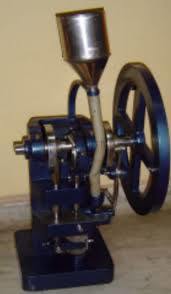
TABLET MACHINE HAND OPERATED (SINGLE PUNCH)
Price 24000 INR / Piece
Minimum Order Quantity : 10 Pieces
Features : Single Station, Easy to Operate, Portable
Material : Stailness Steel
Usage : For Laboratory
Equipment Type : Tablet Compression Machine


|

LABSOUL INDIA
GST : 06ALDPM6316K1Z1
GST : 06ALDPM6316K1Z1
Contact Details

- No. 20/B, Old Tribune Colony, Gate No. 5,Ambala Cantt - 133001, Haryana, India
- Phone :08045477371

- Mr. Mohit Mittal (Proprietor)
- Mobile :08045477371
- Send Inquiry
 Send Inquiry
 Send Inquiry
 Send SMS
 Call Me Free
LABSOUL INDIA
All Rights Reserved.(Terms of Use)
Developed and Managed by Infocom Network Private Limited.
Developed and Managed by Infocom Network Private Limited.

